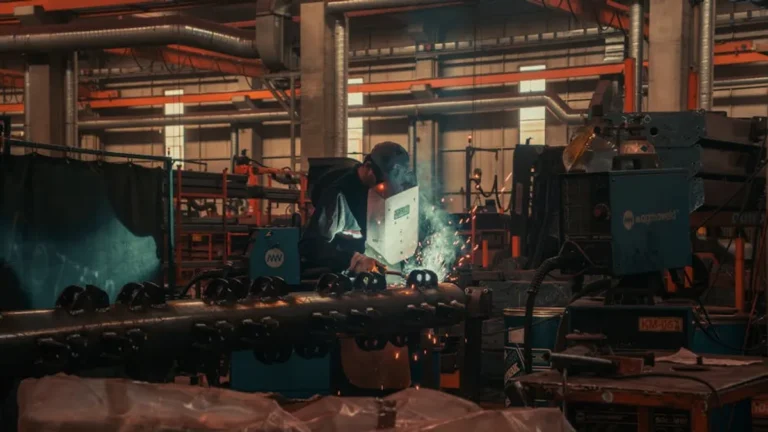

Selecting the correct weld type is a foundational decision in any fabrication or construction project, directly influencing structural integrity, material efficiency, and long-term performance. The choice impacts everything from joint strength and appearance to fabrication cost and compliance with industry standards. Understanding the distinct characteristics, typical applications, and specific requirements of common weld types is essential for engineers, project managers, and procurement specialists to specify appropriate methods and evaluate proposals effectively. This guide outlines the primary weld types, detailing their uses, critical specifications, and considerations for informed selection.
Fillet Welds: Versatility in Corner and Lap Joints
Fillet welds are characterized by their triangular cross-section, primarily used to join two surfaces at approximately right angles to each other. They are among the most common and versatile weld types due to their relatively straightforward application and ability to accommodate slight variations in fit-up.
- Uses: Widely employed in structural steel fabrication for T-joints, lap joints, and outside corner joints. They are prevalent in machine frames, general assembly, and non-pressure retaining components.
- Specs & Considerations:
- Leg Length: The primary dimension for specifying fillet welds, indicating the size of the weld's legs along the joint faces.
- Throat Thickness: The effective load-carrying dimension, measured from the root to the face of the weld. It determines the weld's strength.
- Joint Preparation: Typically requires minimal preparation, often just cleaning, which contributes to lower fabrication costs.
- Material Thickness: Suitable for a wide range of material thicknesses, though larger fillets may be required for thicker sections.
Buying Tip: When evaluating bids for projects involving extensive fillet welding, assess the proposed leg length and throat thickness against design requirements. Smaller fillets might reduce material and labor costs initially, but could compromise long-term structural integrity if undersized for the applied loads. Ensure the contractor's welding procedures specify adequate penetration for the intended application.
Groove Welds: High-Strength Butt and Edge Connections
Groove welds are designed to join two pieces of metal at their edges, often in a butt joint configuration, to achieve full or partial penetration. These welds are critical for applications requiring maximum strength and integrity, frequently matching or exceeding the strength of the base material.
Types of Groove Welds
The specific geometry of a groove weld is determined by the joint preparation, which dictates the shape of the space to be filled with weld metal:
- Square Groove: Used for thin materials where full penetration can be achieved without beveling. Cost-effective due to minimal preparation.
- V-Groove: Common for thicker materials, requiring one or both edges to be beveled into a V-shape. Provides good access for welding.
- Bevel Groove: Similar to V-groove, but only one edge is beveled, often used for joining a plate to a structural shape.
- U-Groove & J-Groove: Used for very thick materials, these preparations reduce the amount of weld metal required compared to V-grooves, minimizing distortion and residual stress. They require more complex machining for preparation.
Uses and Specifications for Groove Welds
Uses: Essential for high-stress applications such as pressure vessels, pipelines, heavy structural steel frameworks, and critical machine components where joint strength is paramount.
Specs & Considerations:
- Depth of Penetration: Crucial for ensuring the weld achieves its designed strength. Full penetration welds are often required for critical applications.
- Joint Preparation: Requires precise machining, grinding, or thermal cutting to create the specified groove angle and root opening. This preparation is a significant cost factor.
- Root Pass Quality: The initial weld pass at the bottom of the groove is critical for preventing defects and ensuring full penetration.
- Weld Metal Volume: U- and J-grooves require less filler metal than V-grooves for equivalent thickness, potentially reducing material and labor costs for very thick sections.
Pro Tip: For critical applications demanding full penetration groove welds, always verify the contractor's quality control procedures. This includes visual inspection, non-destructive testing (NDT) methods like ultrasonic or radiographic testing, and documented welder qualifications specific to the joint and material. Inadequate joint preparation or root pass execution can lead to severe defects, compromising the entire structure.
Plug and Slot Welds: Mechanical Fastening and Stiffening
Plug and slot welds involve welding through a circular hole (plug) or an elongated hole (slot) in one piece of metal to join it to an underlying piece. The weld metal fills the hole and fuses with the bottom component.
- Uses: Primarily for joining overlapping members where a continuous seam weld is impractical or undesirable, or for preventing buckling of lapped sheets. They provide mechanical fastening and can enhance stiffness.
- Specs & Considerations:
- Hole Dimensions: Diameter for plug welds, length and width for slot welds, and spacing are critical for adequate strength.
- Weld Depth: The weld must fully penetrate the top plate and fuse adequately with the bottom plate.
- Filler Metal: Typically uses a filler metal to fill the hole.
Buying Tip: When these welds are specified, ensure the hole dimensions and weld depths are clearly defined in the design drawings. These welds are often used in conjunction with other fasteners or welds and should not be solely relied upon for primary structural load-bearing unless explicitly designed for such. Verify that the welding process chosen is suitable for filling the specified hole geometry without excessive heat input or distortion.
Spot and Seam Welds: Resistance Welding for Sheet Metal
Spot and seam welds are types of resistance welding where heat is generated by the resistance to electrical current flow through the workpieces, fusing them together without filler metal.
- Spot Welds: Create discrete, localized fusion points between overlapping sheets.
- Uses: Dominant in the automotive industry for body assembly, appliance manufacturing, and general sheet metal fabrication. Often automated for high-volume production.
- Specs & Considerations: Weld nugget diameter, shear strength, and spacing are key. Material type and thickness dictate current, pressure, and time settings.
- Seam Welds: Essentially a series of overlapping spot welds, forming a continuous, leak-tight joint.
- Uses: Fabrication of fuel tanks, pipes, heat exchangers, and other containers requiring hermetic seals.
- Specs & Considerations: Continuous nugget formation requires precise control of electrode rotation speed, current, and pressure. Ensures leak-tightness.
Buying Tip: For projects involving sheet metal fabrication, specifying spot or seam welding can offer significant cost and speed advantages due to automation potential and lack of filler metal. However, ensure the material type and thickness are compatible with resistance welding, and that the specified weld spacing and nugget size meet the required strength and seal integrity.
Flare Welds: Utilizing Existing Geometry
Flare welds are used when the joint geometry involves a rounded or flared edge, such as joining a round bar to a plate, or two pieces of tubing or pipe.
- Uses: Often found in situations where one or both members have a curved surface, such as joining pipe to a flat plate, or attaching rounded components in light fabrication.
- Specs & Considerations: The weld metal fills the natural groove formed by the rounded edges. Penetration can be variable depending on the fit-up and process. Strength may be lower than a prepared groove weld due to geometry.
Buying Tip: While flare welds can simplify joint preparation, their strength can be less predictable than prepared groove welds. For critical applications, ensure that the design accounts for the potentially reduced effective throat and that the welding procedure specifies sufficient penetration. Consider alternative joint designs if high strength is a primary concern.
Strategic Weld Type Selection for Project Success
The strategic selection of weld types is not merely a technical detail; it is a critical commercial decision influencing project timelines, material costs, labor expenses, and the ultimate reliability of the fabricated component or structure. Each weld type offers distinct advantages and limitations regarding strength, appearance, ease of execution, and required joint preparation. By aligning weld type choices with specific project demands—considering material thickness, anticipated loads, environmental exposure, regulatory compliance, and budget constraints—stakeholders can optimize both performance and cost efficiency. Always verify that specified weld types are compatible with the chosen welding processes and that the fabrication team possesses the necessary qualifications and experience to execute them to standard.
Frequently Asked Questions
What is the strongest type of weld?
Generally, full penetration groove welds are considered the strongest, as they are designed to match or exceed the strength of the base material when executed correctly. The strength depends heavily on proper joint preparation, welding procedure, and quality control.
How do I choose the right weld type for my project?
Consider the material type and thickness, the anticipated static and dynamic loads, the required joint strength and ductility, aesthetic requirements, accessibility for welding, and budget. Consult with design engineers and experienced fabricators to ensure the selected weld type meets all performance and cost criteria.
Are some weld types easier to perform than others?
Yes, fillet welds are generally considered easier to perform than full penetration groove welds, as they require less stringent joint preparation and are more forgiving of minor fit-up variations. Groove welds, especially U- and J-grooves, demand higher skill and precision.
What role does joint preparation play in weld quality?
Joint preparation is crucial for achieving high-quality welds, particularly for groove welds. Proper preparation ensures adequate access for the welding electrode, allows for full penetration, minimizes defects, and helps control distortion. Incorrect preparation can lead to weak joints, incomplete fusion, and costly rework.